Real change doesn’t always happen instantly. Sometimes the first step is simply planting a seed.
What made you decide to become a Champion of Change?
I chose to become a Champion of Change because I believe lasting change begins with people who are willing to challenge harmful norms and lead by example. I wanted to strengthen my knowledge and skills so I could become a more effective advocate for gender equality, youth empowerment and positive social change.
For me, being a Champion of Change is not just about attending a training — it’s about taking responsibility, using my voice to inspire others, and working with my community to create a future where everyone, especially girls and young women, has equal opportunities to thrive. I believe that even small actions, when taken consistently, can create meaningful and lasting impact.
What is one moment where you saw a family or community member change their mind about FGM/C or child marriage?
One moment I clearly remember was during a conversation with a relative about child marriage. At first they believed that marrying girls early was the best way to protect them and secure their future. Instead of arguing, I shared what I had learned about the importance of education, the health risks of early pregnancy, and how delaying marriage can create better opportunities for girls.
By the end of the conversation they didn’t completely change their opinion, but they admitted they had never considered those impacts before. They said they would think more carefully before supporting early marriage, and would encourage girls in the family to finish their education first.
That experience reminded me that real change doesn’t always happen instantly. Sometimes the first step is simply planting a seed that encourages people to question long-held beliefs and become more open to change.
What is the hardest part of this work, and what keeps you going?
The hardest part of this work is that changing attitudes and social norms takes time. Many people have grown up believing that practices like FGM/C or child marriage are normal, so change doesn’t happen after just one conversation.
What keeps me going is the belief that every conversation matters. Even small changes in awareness can lead to bigger changes over time. Knowing that I can help create a safer and more equal future for girls and young people motivates me to continue.
What would you say to a girl in your community who is worried about her future right now?
I would tell her that her dreams and her voice matter, even if things feel difficult right now. I would encourage her not to lose hope, to continue her education if possible, and to seek support from trusted family members, teachers or community leaders.
I would remind her that she is not alone, and that her future should be shaped by her own potential, not by fear or harmful expectations. Every girl deserves the opportunity to learn, grow and make informed decisions about her life — and I would encourage her to believe in herself and keep moving forward, one step at a time.
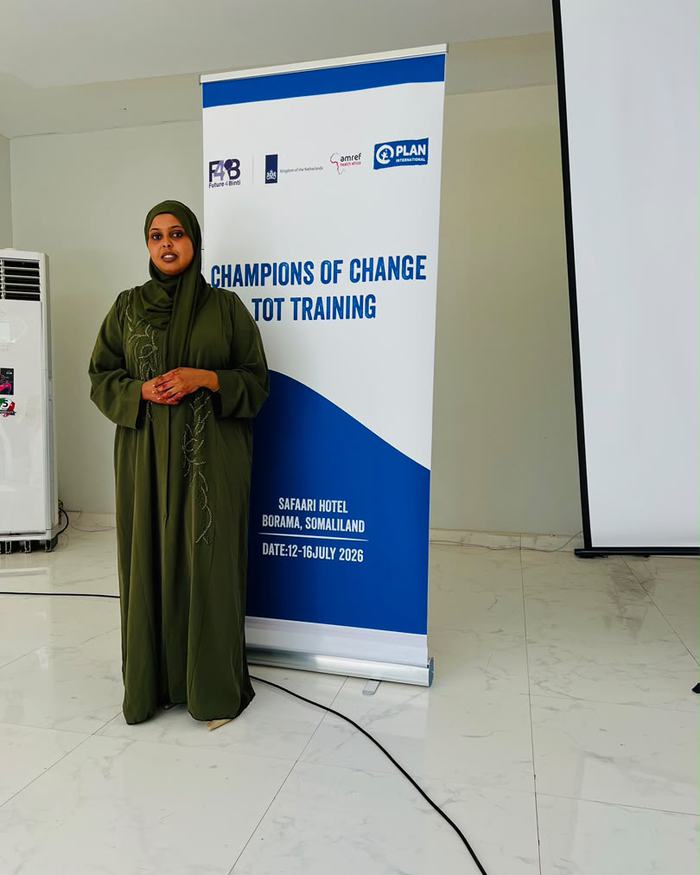
Photographed at the Champions of Change training of trainers, Safaari Hotel, Borama, Somaliland · 12–16 July 2026